
Drone Facade Inspection Singapore for BCA Periodic Facade Inspection
Drone facade inspection is a technology-assisted method used to capture high-resolution photographs and videos of a building’s external facade. In Singapore, drones, also known as Unmanned Aircraft Systems (UAS), may assist the Competent Person during the visual inspection stage of Periodic Facade Inspection (PFI), subject to BCA requirements and the use of accredited UAS service providers.
A drone does not replace the professional judgement of the Competent Person. It supports the PFI process by helping the inspection team review difficult-to-access elevations, identify visible defects and plan close-range inspection where required.
What Is Drone Inspection in Facade Inspection?
Meaning of Drone Facade Inspection
Drone facade inspection refers to the use of drones to visually inspect external building elevations, facade materials and exterior features. It is useful for viewing upper floors, parapets, ledges, cladding, windows, fins, louvres, canopies, external ceilings and other facade elements that may be difficult to observe from ground level.
Role of Drone Inspection in BCA PFI
For BCA Periodic Facade Inspection, drone inspection can support the visual inspection by providing a systematic photographic record of the building facade. The images help the Competent Person review possible defects, identify risk areas and decide where closer investigation or physical access may be required.
Accredited UAS Service Provider and CP Responsibility
Where drones are used for PFI visual inspection, the inspection should be planned in accordance with applicable BCA requirements, including the use of accredited UAS service providers where required. The Competent Person remains responsible for the technical assessment, inspection conclusions and recommendations in the PFI report.
On-Site Drone Facade Inspection Photos
CP Observation, Safety Cordon, and Close-Up Drone Capture
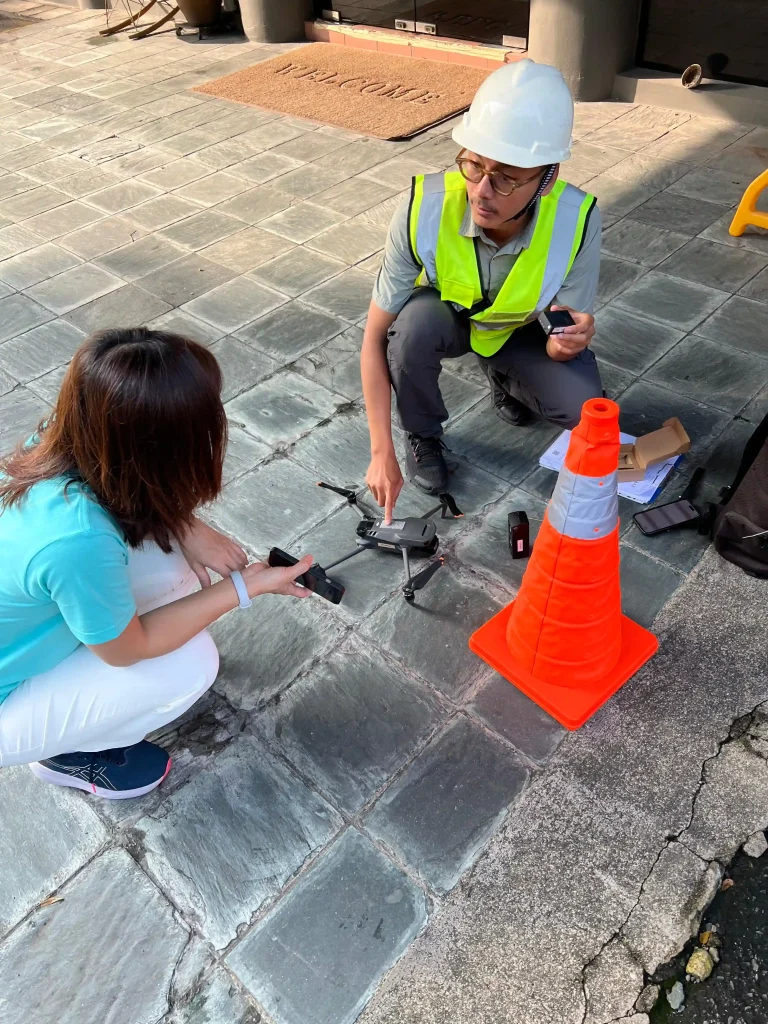
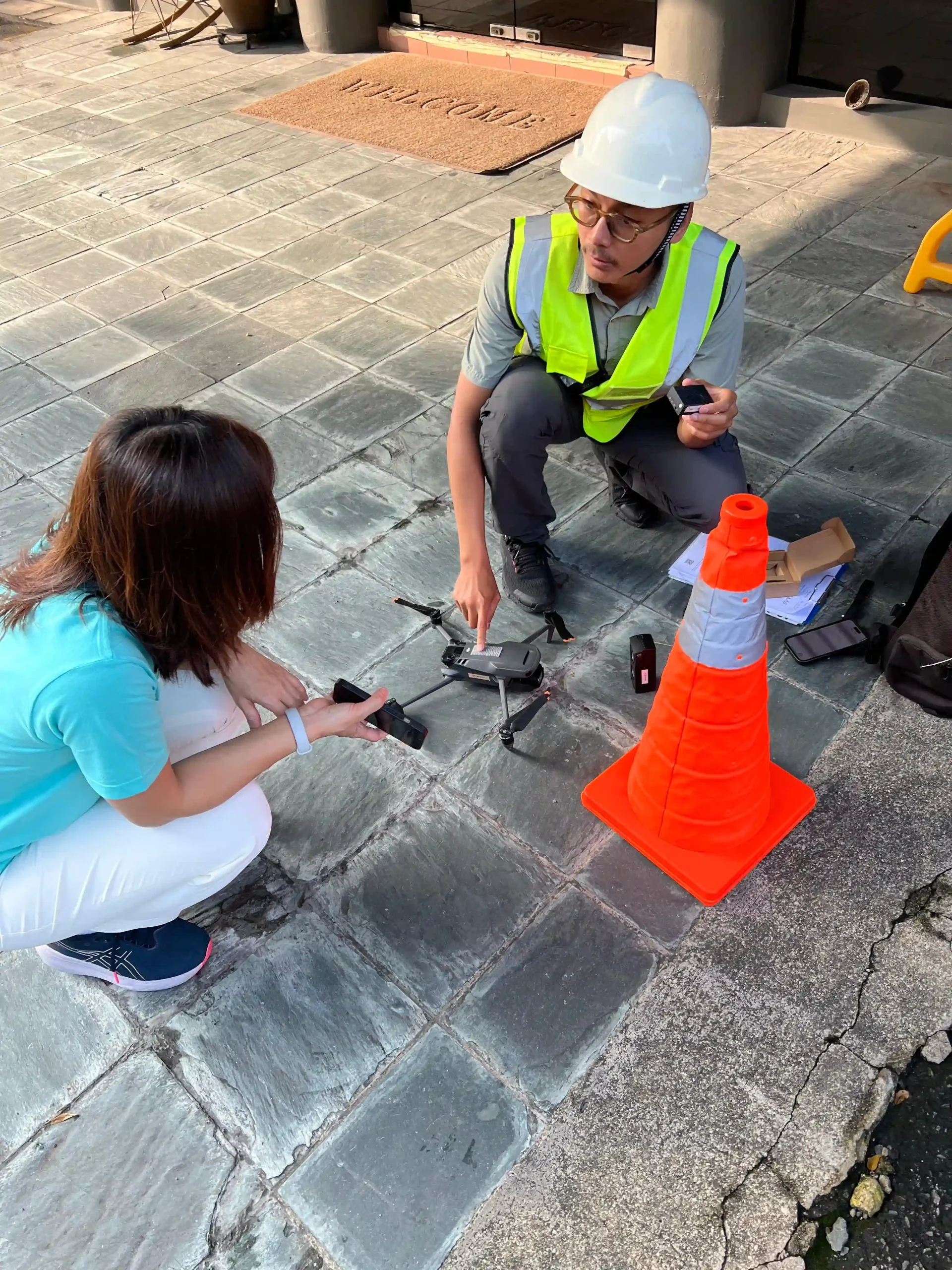
Drone operator to ensure valid permits are obtained before flying the drone
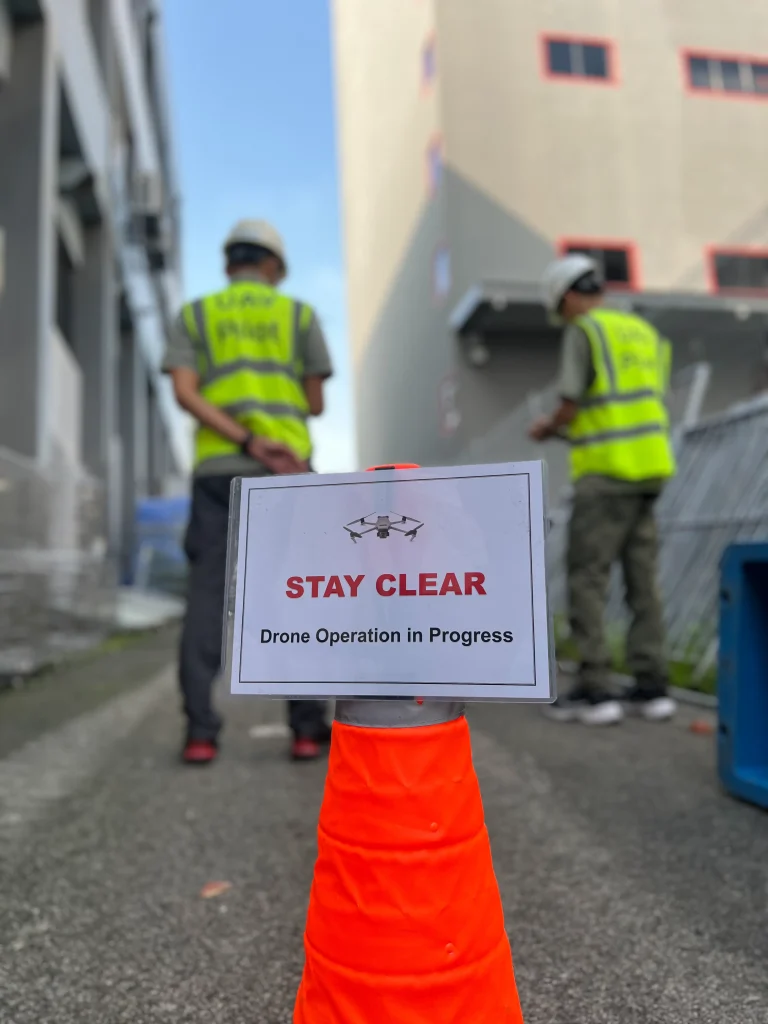
Cordoning off the area before drone operation
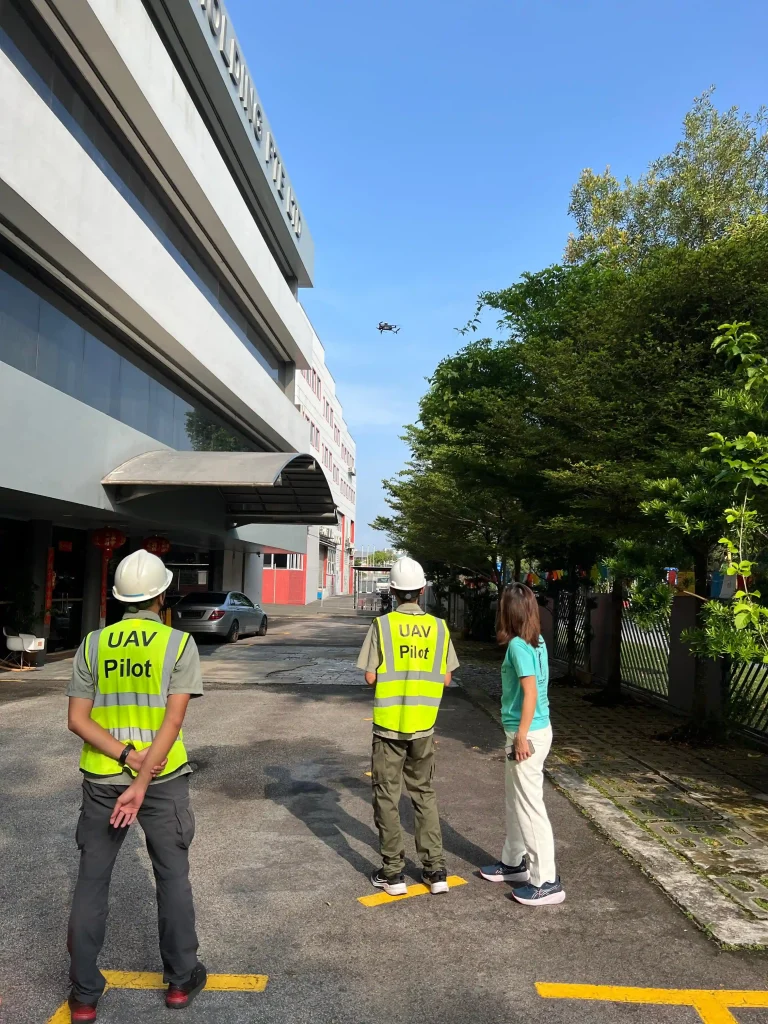
CP observed and assessed the condition of the entire facade areas horizontally and vertically, look out for dilapidation and displacement of façade elements.
How Drone Facade Inspection Supports Periodic Facade Inspection
Assisting with 100% Visual Inspection
Drone inspection helps capture the overall condition of all facade elevations. It allows the inspection team to review external walls, windows, cladding, ledges, sunshades, canopies and other exterior elements in a structured manner.
High-Resolution Photo and Video Documentation
Drone photographs and videos provide a clear visual record for the inspection file. They can be organised by elevation, floor level and defect location to support the Competent Person's review.
Defect Mapping for CP Review
Observed defects can be marked up on elevation drawings, photo logs or defect schedules. This helps show the location and extent of visible defects such as cracks, stains, spalling, loose elements, corrosion and missing fixings.
Better Planning for Close-Range Inspection
Drone findings can help identify representative or higher-risk areas that may require rope access, gondola, boom lift, scissor lift or other safe access methods for close-range tactile inspection.
What Facade Defects Can Drone Inspection Help Detect?
Cracks, Spalling Concrete and Surface Deterioration
Drone images may help identify visible cracks, concrete spalling, water stains, paint peeling, bulging areas and other signs of surface deterioration.
Loose Tiles, Cladding Panels and Facade Elements
Drone inspection is useful for detecting visible loose or displaced tiles, cladding panels, coping, sunshades, fins, louvres, canopies and external ceiling panels.
Corrosion, Missing Fixings and Unsafe Attachments
Drone photographs may show rusted brackets, corroded bolts, missing screws, loose supports, damaged window elements, defective sealants and unsafe external fixtures such as signage, lighting or air-conditioning supports.
Why Choose Us for Drone Facade Inspection and PFI Support?
Registered Architect Competent Person
Our PFI service is led by a Registered Architect who is qualified to act as the Competent Person for Periodic Facade Inspection in Singapore.
Practical Inspection Planning
We help building owners, MCSTs, managing agents and facility managers plan the most suitable inspection method, including drone visual inspection, rope access inspection and close-range checks where required.
Clear Defect Reporting
We provide clear photo documentation, defect mapping, technical assessment and practical recommendations for facade safety and PFI compliance.