
Rope Access Inspection Singapore
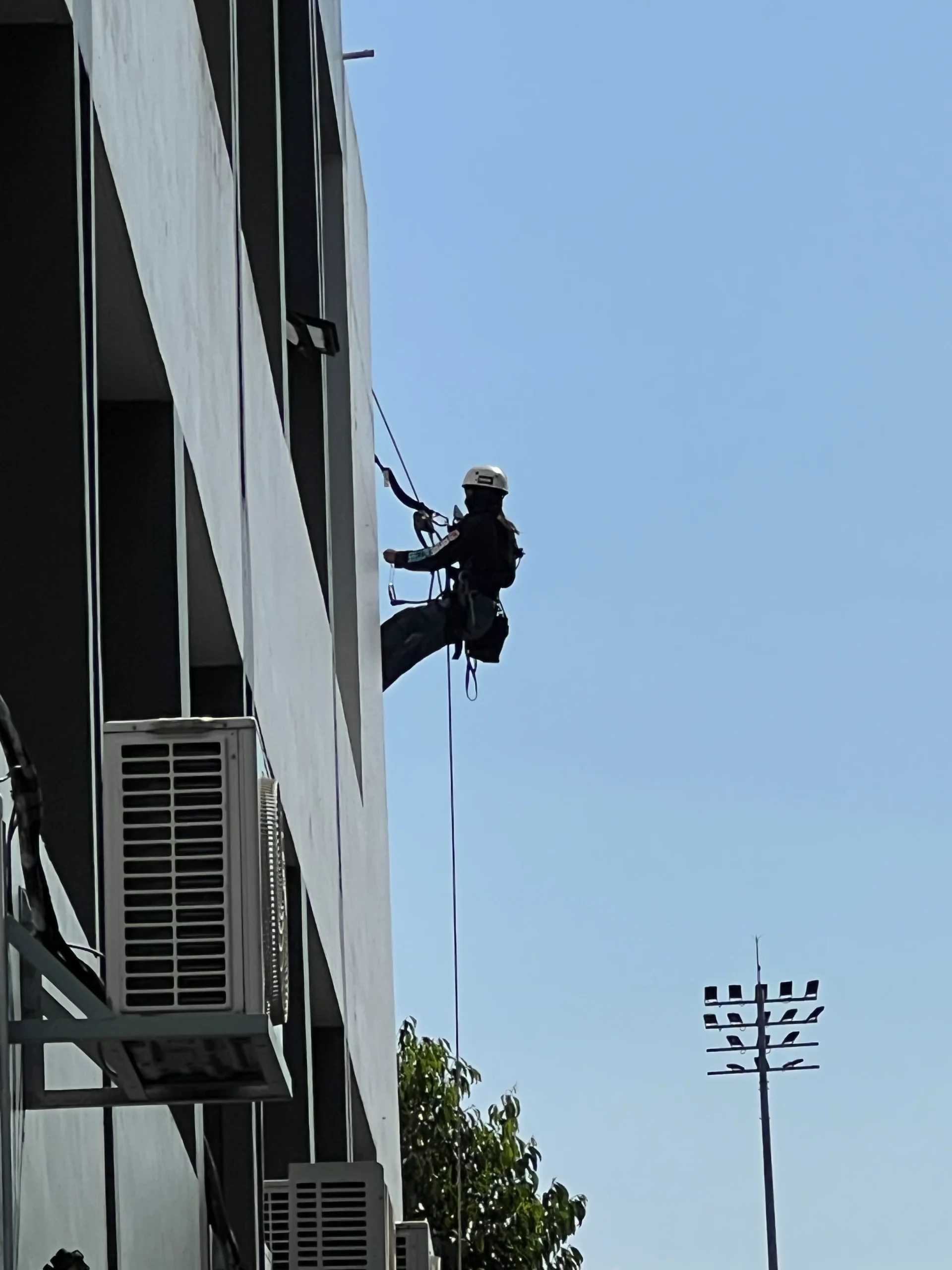
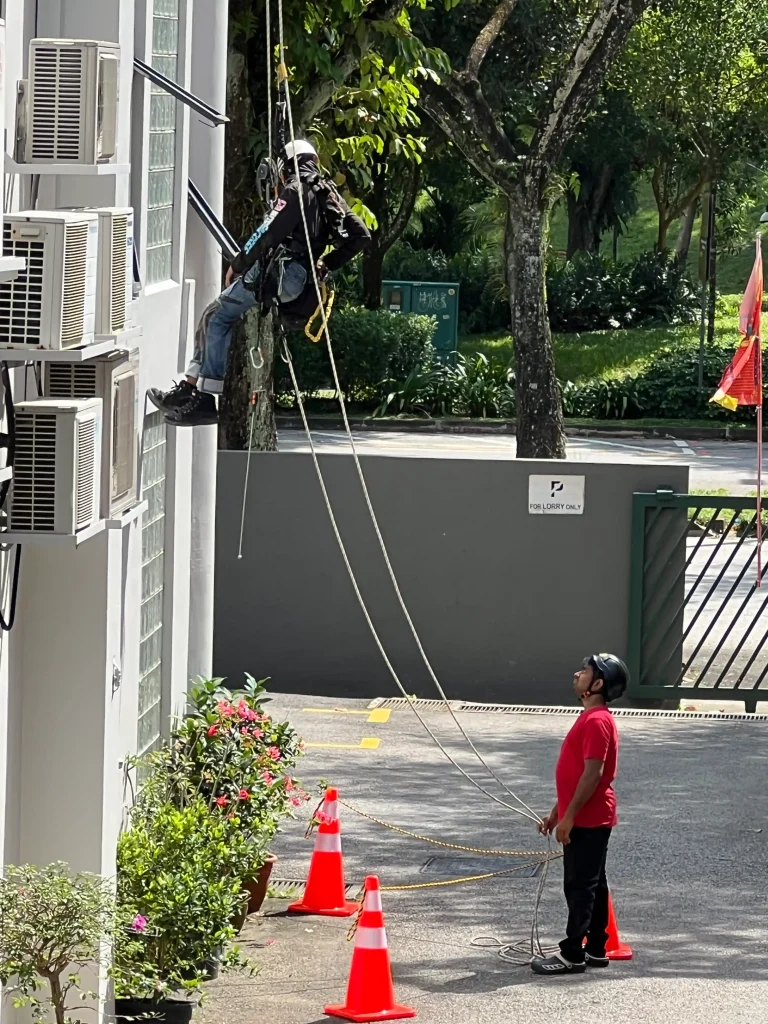
Rope access facade assessment is a close-range inspection method used to assess building facades at height where physical access is required. In Singapore, rope access can support BCA Periodic Facade Inspection (PFI) by allowing close-up visual checks, tactile assessment and photo documentation of selected facade areas under the direction of the Competent Person.
For BCA PFI, rope access should be understood as an access method, not a replacement for the Competent Person. The Registered Architect or Professional Engineer acting as CP remains responsible for the inspection methodology, technical judgement, defect assessment and PFI report.
What Is Rope Access Facade Assessment?
Meaning of Rope Access Facade Assessment
Rope access facade assessment uses trained personnel, ropes, anchors and safety systems to reach external facade areas that may be difficult to inspect using ground-level observation, ladders, scaffolds, gondolas or mobile elevating work platforms.
Role in BCA Periodic Facade Inspection
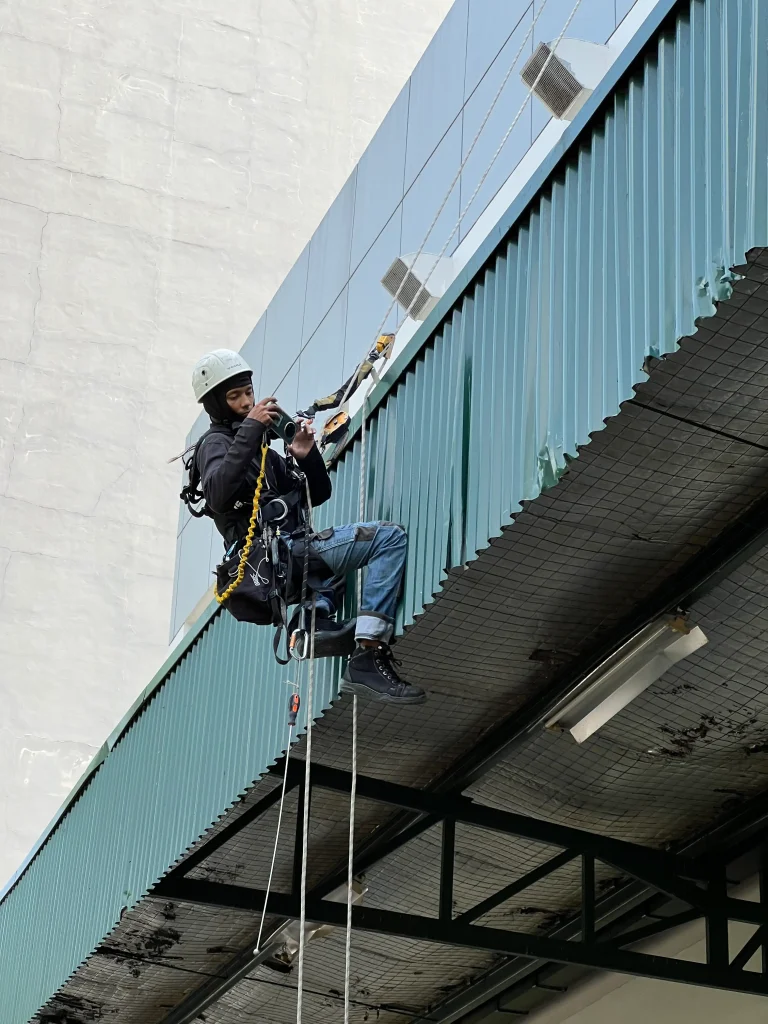
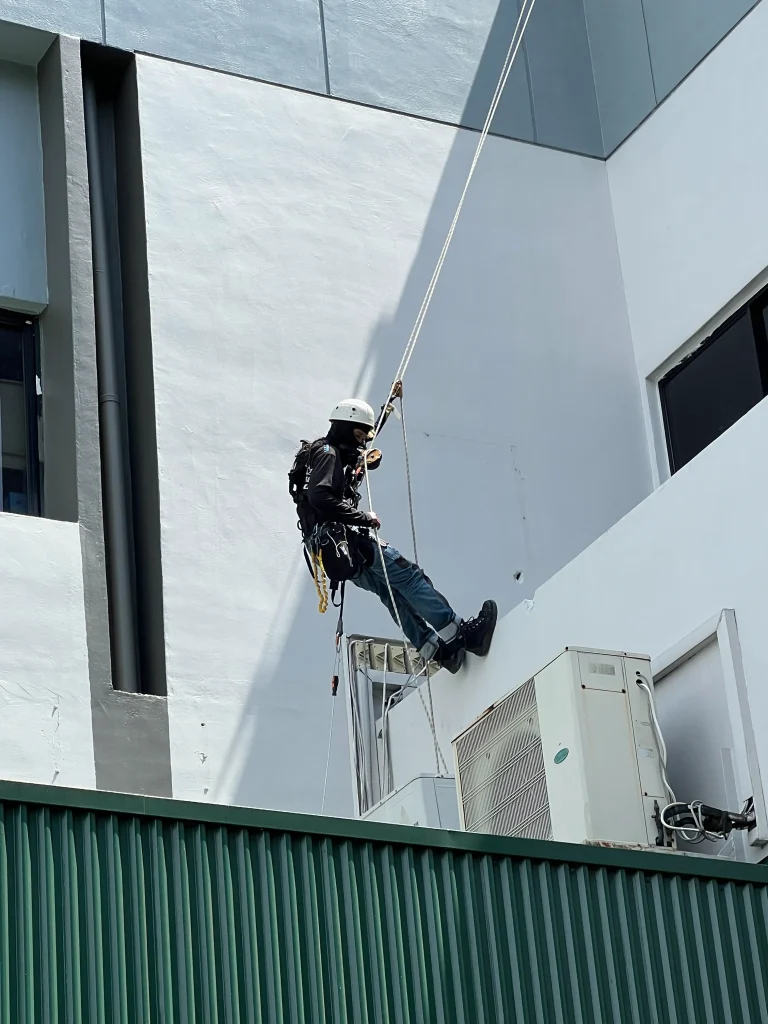
Within the PFI process, rope access is most relevant to close-range inspection. It enables close-up review of selected facade locations so that the inspection team can physically observe, photograph, tap, probe or check facade elements where required.
CP Supervision and Professional Responsibility
The facade assessment must be carried out under the direction and supervision of the Competent Person. A Facade Inspector may assist with inspection work, but the CP remains ultimately responsible for assessing the findings and overall condition of the building facade.
How Rope Access Supports BCA PFI Close-Range Inspection
Close-Up Visual Checks at Height
Rope access allows the inspection team to reach selected portions of the facade and view defects at close range. This is useful for high-rise elevations, recesses, overhangs, ledges, parapets, external ceilings and areas where standard access may be difficult.
Tactile Assessment and Probing
Close-range inspection involves physical contact with the facade. Depending on the facade material and CP methodology, checks may include tapping, light probing, borescope inspection, non-destructive testing or other suitable techniques.
Photo Records and Defect Verification
Rope access inspection provides close-up photographs and notes that help verify visible defects such as cracks, loose tiles, debonded plaster, corrosion, failed sealant, loose panels, damaged fixings and unsafe external attachments.
Targeted Inspection After Visual Survey or Drone Review
Rope access is often planned after a full visual inspection or drone-assisted survey. The earlier visual findings help the CP select suitable close-range inspection locations and prioritise higher-risk facade areas.
BCA-Aligned Close-Range Inspection Requirements
Minimum 10% Close-Range Inspection Per Elevation
BCA PFI requires close-range inspection to be carried out on suitable parts of each building elevation, covering at least 10% of the surface area of each elevation. Rope access can be one practical access method where it is suitable for the building and site conditions.
Selection of Inspection Locations
The selected close-range inspection areas should consider the full visual inspection findings, past records, possible defect locations, deterioration risk, human traffic below the facade and representative coverage around the building perimeter.
Records of Inspection Findings
Inspection records should clearly identify the time and date of inspection, facade elevation, inspection location, parts inspected, observed defects, photographs and any follow-up recommendations required for CP assessment.
When Further Facade Investigation May Be Needed
Widespread or Systemic Defects
If severe or repeated defects are found, the CP may recommend further investigation to determine the extent and cause of deterioration before repair works are finalised.
Concealed Supports and Hidden Conditions
Where concealed brackets, anchors or supports cannot be properly assessed visually, further checks such as borescope inspection, selective opening-up or testing may be considered based on CP judgement.
Repair Recommendations and Follow-Up
The final assessment may include recommendations for immediate safety measures, repair works, monitoring, further investigation or submission of completion records after remedial works.
Why Choose Us for Rope Access Facade Assessment?
Registered Architect Competent Person
Our PFI service is led by a Registered Architect who is qualified to act as the Competent Person for Periodic Facade Inspection in Singapore.
Practical Access and Inspection Planning
We help building owners, MCSTs, managing agents and facility managers select practical inspection methods, including rope access, drone visual survey, gondola, boom lift or other suitable access methods where appropriate.
Clear Defect Assessment and Reporting
We provide clear close-up photo records, defect mapping, CP assessment and practical recommendations for facade safety, repair planning and PFI compliance.